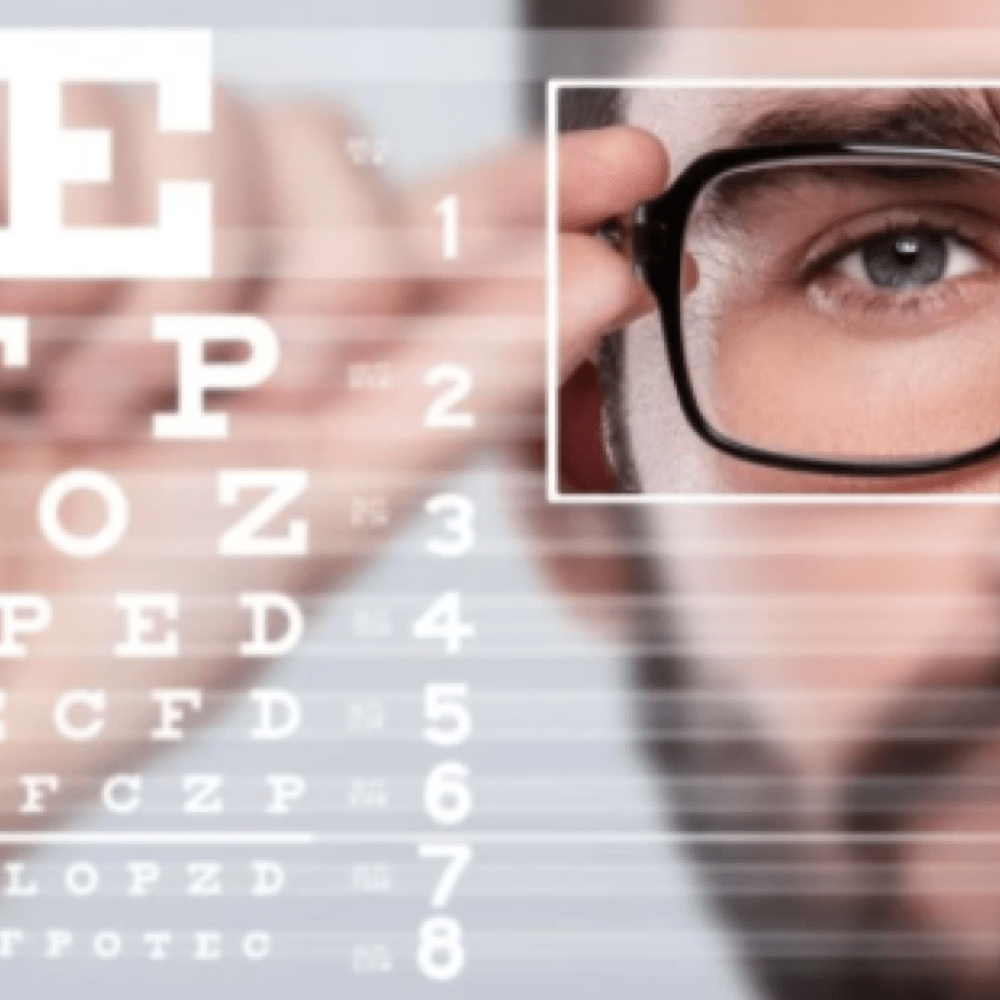
Presbyopia and myopia are two of the most common vision conditions, and many people wonder whether it is possible to have both simultaneously. The answer is yes — it is more common than you might think. At CristalesGafas, we explain both conditions and how to correct them effectively.
What Is Myopia?
Myopia is a refractive error that causes difficulty seeing distant objects clearly, while nearby objects remain sharp. It occurs because the eye is slightly longer than normal, causing light to focus in front of the retina rather than directly on it. Myopia usually begins in childhood or adolescence and can progress until early adulthood.
The most common symptoms of myopia include blurry vision when looking at distant objects, squinting to try to see better, and eye strain or headaches after prolonged use of the eyes at a distance.
What Is Presbyopia?
Presbyopia, commonly known as “tired eyes” or “age-related long-sightedness”, is a natural condition that appears from around the age of 40-45. Unlike myopia, which is caused by the shape of the eye, presbyopia is caused by the progressive hardening and loss of flexibility of the crystalline lens — the natural lens inside the eye.
This loss of flexibility makes it difficult to focus on close objects, causing blurry near vision. It is a normal part of ageing that affects virtually everyone.
Can You Have Myopia and Presbyopia Simultaneously?
Yes, absolutely. In fact, it is very common for people with myopia to develop presbyopia as they age. This is sometimes called “compound myopia-presbyopia” and requires a specific approach to correction.
Myopes who develop presbyopia may find that their prescription needs to be adjusted, or that they need to adopt progressive lenses (which correct both near and distance vision in a single lens).
How to Correct Myopia and Presbyopia Together
- Progressive lenses: The most comfortable and practical option. A single lens corrects distance vision (myopia) in the upper zone and near vision (presbyopia) in the lower zone, with a smooth transition between the two.
- Bifocal lenses: These have two clearly differentiated zones — one for distance and one for near — with a visible dividing line.
- Occupational lenses: Designed for intermediate and near vision, ideal for office or screen work.
At CristalesGafas
At CristalesGafas, we manufacture progressive, bifocal, and occupational lenses tailored to your specific prescription. Our optometrists will advise you on the best option for your visual needs and lifestyle, whether you have myopia, presbyopia, or both together.